
Pistol-Grip vs. Inline Press Tools How to Choose the Right One for Your Application_Knowledge Center_Latest News | Kinshine Trading Company Ltd.

 Home
Home- Latest News
- Knowledge Center
- Pistol-Grip vs. Inline Press Tools How to Choose the Right One for Your Application
Pistol-Grip vs. Inline Press Tools How to Choose the Right One for Your Application
Pistol Grip vs. Straight Design: How to Choose the Right REMS Mini Press Tool
In modern plumbing and MEP installation work, efficiency, precision, and reliability matter. REMS mini cordless press tools are trusted by professional users who need stable quality, lightweight handling, and fast pressing performance. Both pistol-grip and straight-type designs are excellent tools. The real question is not which one is better, but which one better fits your working environment, operating habits, and jobsite conditions.
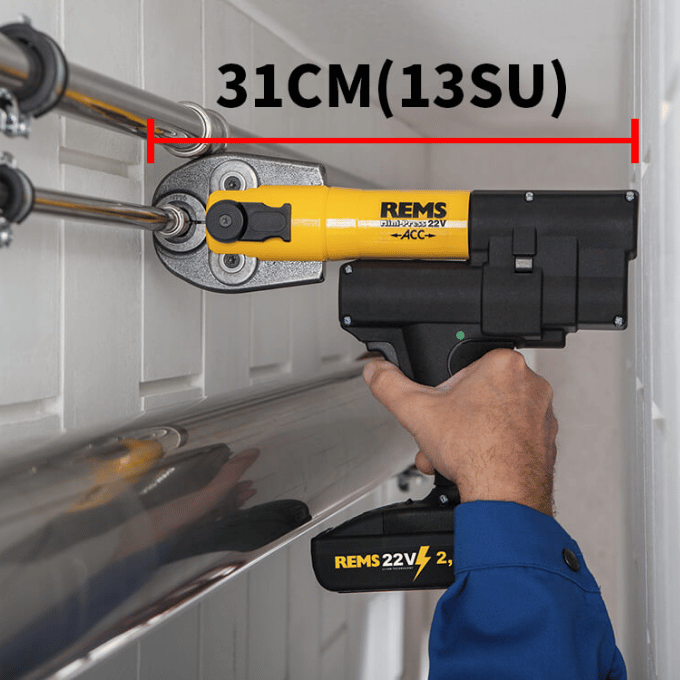
Both Are Excellent — the Difference Is Handling and Jobsite Fit
REMS offers two different mini press tool formats: pistol grip and straight design. In terms of core performance, both provide strong pressing capability, compact size, fast operation, and professional-grade reliability. However, once used on a real jobsite, body length, grip angle, weight balance, and access space can directly affect comfort and work efficiency.
Choosing a press tool should not be based only on asking “which one is stronger?” A better question is: “Which body design better fits my pipe layout, jobsite space, and operating habits?”
Shared Strengths of REMS Mini Press Tools
Reliable manufacturing quality and precision engineering are key reasons why REMS press tools are trusted by professional users.
The tool weighs approximately 2.1 kg, helping reduce fatigue during long working hours.
The pressing cycle can be completed in about 4 seconds, with automatic return for smoother repeated operation.
A single charge can complete approximately 390 pressings on 1/2" pipe, supporting high-frequency jobsite use.
With approximately 7 tons of pressing force, it supports common press fitting applications in Taiwan up to 1".
Cordless operation reduces dependence on power sources and is suitable for plumbing, HVAC, fire protection, and building service applications.
The difference between the pistol-grip and straight-type tools is not pressing quality. It is working posture, access angle, and handling preference. The right choice depends on your jobsite conditions.
Model Comparison: Pistol Grip vs. Straight Design
| Comparison | Pistol Grip | 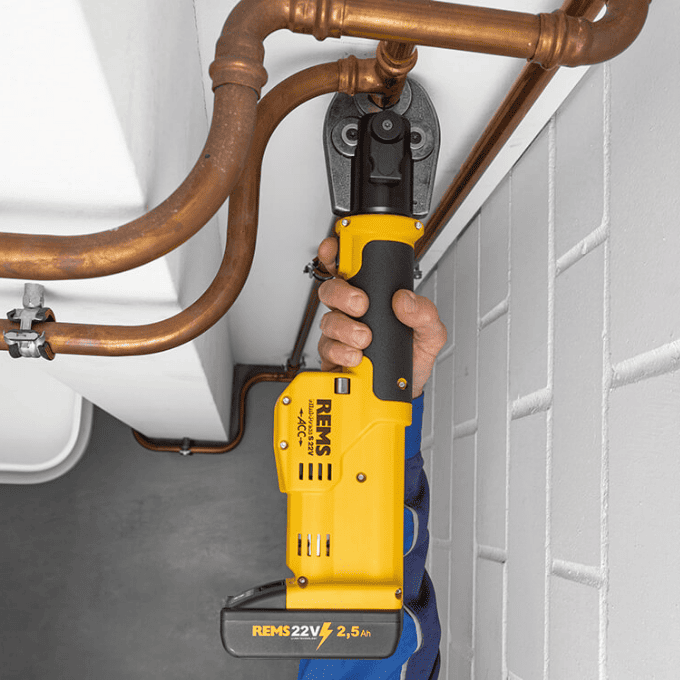 Straight Design Straight Design |
|---|---|---|
| Body Length | Approx. 31 cm | Approx. 42 cm |
| Weight Balance | Horizontal balance with ergonomic grip feel | Lower vertical center of gravity for stable handling |
| Best-Suited Scenarios | Overhead work, long-duration handheld use, and users familiar with pistol-grip tools | Confined spaces, wall corners, floor-level work, and tight pipe areas |
| Main Advantage | Comfortable grip and flexible multi-angle handling | Direct force application and easier access above pipework |
| Selection Logic | Choose this if you prefer the feel of a drill or impact driver | Choose this if you often work in restricted spaces |
In terms of professional performance, both tools are capable. But if you use the tool every day, handling, weight balance, and access angle will have a much bigger impact on efficiency and fatigue.
How to Choose: Start from Your Jobsite Conditions
If you often work between narrow pipe runs, near wall corners, close to the floor, or directly above pipework, the straight-type design can make it easier to reach the pressing position.
If you are used to drills or impact drivers, or if you often perform overhead pressing for longer periods, the pistol-grip design may feel more natural and comfortable.
A press tool is not just a specification sheet. It affects daily work stability, speed, and fatigue. When possible, we recommend trying both grip styles in person before making a final decision.
Both pistol-grip and straight-type tools can deliver professional pressing performance. The real difference is working posture, space limitation, and fatigue during long operation. A hands-on trial often tells you more than a specification sheet.
Contact the Kinshine REMS professional team. Based on your working environment, common pipe sizes, and operating habits, we can help recommend the more suitable model.