
Why has REMS lithium-ion technology become the “power ceiling” for pipe working tools?_Knowledge Center_Latest News | Kinshine Trading Company Ltd.

 Home
Home- Latest News
- Knowledge Center
- Why has REMS lithium-ion technology become the “power ceiling” for pipe working tools?
Why has REMS lithium-ion technology become the “power ceiling” for pipe working tools?
Why the REMS 22V Li-Ion Battery Is the Core of a Professional Tool System
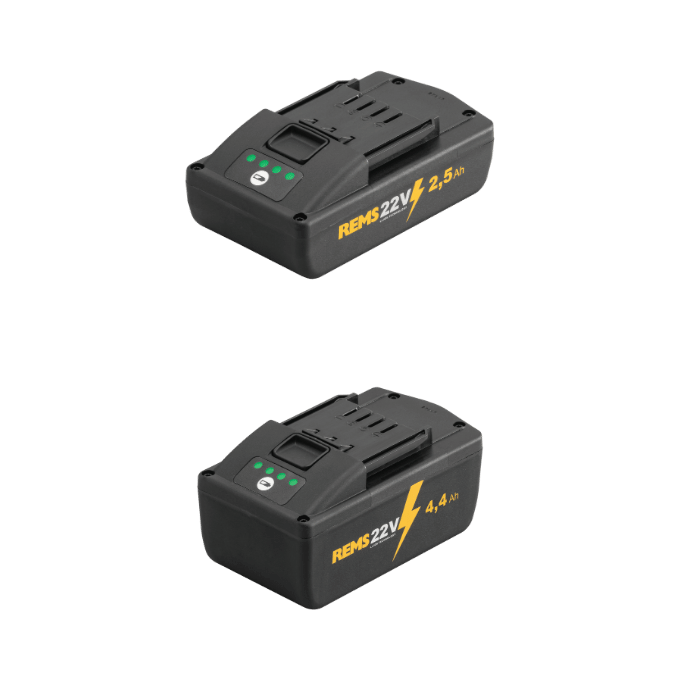
In plumbing, MEP, and industrial installation work, tool stability and runtime directly affect jobsite progress. The REMS 22V Li-Ion system is not just a battery. It is the foundation that supports pressing, cutting, and mobile jobsite efficiency.
Four Key Factors When Choosing a Professional Battery System
For professional users, a battery is not just an accessory. What matters is stable output, runtime, tool weight, environmental reliability, and whether the same battery platform can support multiple cordless tools.
The 21.6V Li-Ion platform provides stable power output for high-load tools such as press tools and cutters, helping maintain a smoother jobsite workflow.
Using the Mini-Press 22V ACC as an example, one full charge can complete approximately 390 pressings on DN15 copper pipe, supporting high-frequency jobsite use.
High energy density helps maintain tool balance and reduce weight burden during overhead, confined-space, and long-duration work.
A good battery system should provide stable output, reliable runtime, and cross-tool compatibility, reducing jobsite interruptions caused by frequent battery changes or tool limitations.
1. 22V Li-Ion Platform for High-Load Tool Output
The REMS 22V / 21.6V Li-Ion system supports high-load cordless tools such as press tools and pipe cutters. For jobsite work, stable power output means smoother operation and fewer interruptions caused by insufficient power.
Using the Mini-Press 22V ACC as an example, a fully charged battery can complete approximately 390 pressings on DN15 copper pipe. For large-scale piping work, reliable runtime helps reduce battery changes and improves jobsite efficiency.
Jobsite productivity depends heavily on workflow continuity. Battery runtime and output stability directly affect the efficiency of a full working day.
2. Lightweight Design to Reduce Long-Hour Fatigue
If a cordless tool is too heavy, fatigue builds up quickly during long working hours. This is especially obvious when working overhead, in corners, or inside maintenance openings where tool weight and balance directly affect handling stability.
With a 22V battery, the REMS E-type tool body is approximately 2.8 kg. Combined with balanced body design, it reduces the burden of long handheld operation. For professional users, this affects not only comfort but also pressing angle and work precision.
A good cordless tool is not only light. It should also distribute weight properly so users can maintain control at different working angles.
3. Jobsite Reliability in High and Low Temperatures
Jobsite environments are often unpredictable. Low temperature, high temperature, outdoor sunlight, and continuous use can all affect battery tool performance. REMS Li-Ion batteries operate within a temperature range from -10°C to +60°C, supporting a wide range of jobsite conditions.
For sites that require stable pressing force and continuous work, battery environmental reliability is more than a technical specification. It helps reduce downtime and efficiency loss.
From cold outdoor environments to high-temperature jobsites, stable power delivery directly affects whether the tool can continue operating normally.
4. Smart Battery Management for Safer and Longer Use
Can be charged whenever needed without waiting for full discharge, improving daily jobsite convenience.
Current and temperature monitoring helps reduce the risk of damage from over-discharge, overheating, or heavy load.
Step-style battery indicators help users check runtime status before work and reduce the risk of unexpected power loss.
The same battery platform can support multiple REMS cordless tools, improving equipment investment efficiency.
For professional users, battery life, protection design, and power level visibility directly affect long-term tool cost and jobsite efficiency.
The value of the REMS 22V Li-Ion system lies in stable output, runtime, environmental reliability, and same-system tool compatibility. For professional jobsites, these details directly affect efficiency, cost, and work stability.